MacBoon Family Quintaped Transformation Legend
Fantastic Beasts and Where to Find ThemThe MacBoon Family Quintaped Transformation Legend is an uncertain tale of a family feud on the Isle of Drear, in which the McCliverts transform the MacBoons into five-legged creatures and are killed in turn. Its ending leaves the transformed family unable to return to human form, while the island has no surviving human witnesses. The account’s significance lies as much in its explicit uncertainty as in its grim reversal: the story offers a possible origin for the creatures, but closes by acknowledging that no one remains to establish whether it happened.
Setting and Background
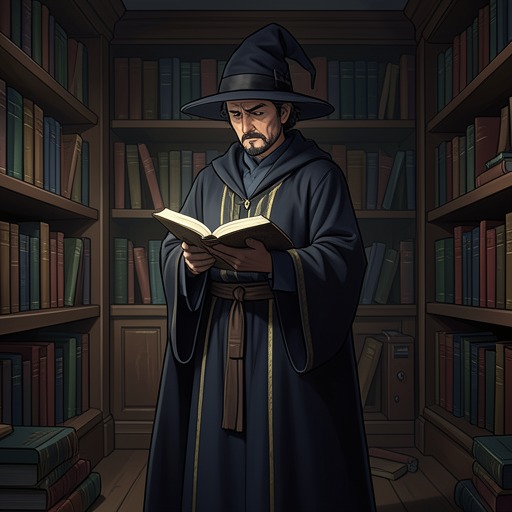
The legend is set on the Isle of Drear, an island said to have once been inhabited by two wizarding families, the McCliverts and the MacBoons. The available account centers on their conflict rather than on the island’s wider history. Its remote setting becomes consequential when the feud ends with no human inhabitants left to tell the story firsthand.
The immediate cause is a conflict between the chief of the McClivert clan and Quintius, head of the MacBoon clan. The tale says that their dispute led to the death of Dugald. It does not explain the original disagreement or identify Dugald’s precise place in either family, so the legend’s revenge follows a sharply stated loss whose circumstances remain unspecified.
Retaliation and Transformation
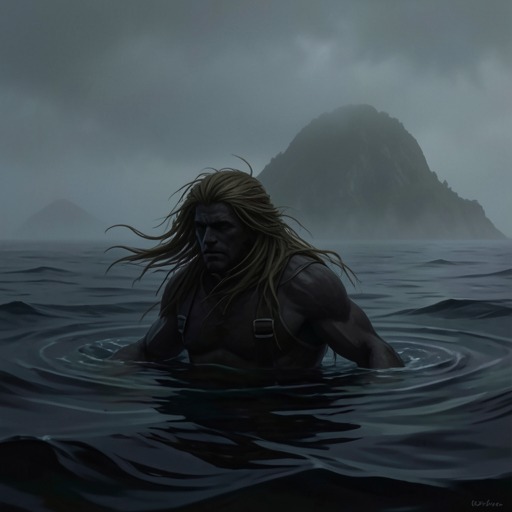
In retaliation for Dugald’s death, a group of McCliverts surrounds the MacBoon dwellings one night. They transform every MacBoon into a monstrous, five-legged creature. The act is presented as a deliberate response to the earlier death, but its effect is not the simple defeat of the rival family: the transformation creates a new and more dangerous situation for the attackers.
The McCliverts realize too late that the transformed MacBoons are far more dangerous in their new state. The legend adds that the MacBoons had a reputation for great ineptitude at magic, but this reputation does not make them manageable once transformed. Their resistance to every attempt to restore them to human form makes the change more than a temporary enchantment and turns the McCliverts’ retaliation into a crisis they cannot undo.
Reversal and Lasting Consequence
The transformed MacBoons kill every last McClivert, leaving no human beings on the island. The revenge plot therefore reverses its apparent direction: the family that initiates the transformation does not gain lasting control over its rivals, and the MacBoons’ changed form becomes the means by which the McCliverts are eliminated.
The victory is itself incomplete. Only after the McCliverts are gone do the MacBoon creatures understand that, without anyone left to wield a wand, they must remain as they are forever. The tale thus makes the absence of a wizard capable of reversing the spell decisive: the transformation survives the feud, but it also fixes the MacBoons in a permanent nonhuman form. No reconciliation or return follows; the story ends with both families removed from human society, one killed and the other irreversibly transformed.
Legend, Evidence, and Uncertainty
The account refuses to present itself as verified history. It concludes that whether the tale is true will never be known, because no McCliverts or MacBoons survive to say what happened. The absence of witnesses is not incidental to the ending: it is the reason the legend’s central claim cannot be confirmed. The story supplies a complete chain of cause, retaliation, reversal, and consequence, then withholds the certainty that would turn that chain into established fact.
That qualification fits the book’s broader attention to how magical creatures can be misunderstood or assigned explanations through accounts that cannot fully establish what occurred. The guide recalls that medieval Muggle art and literature treated creatures now regarded as imaginary as real, and it gives the example of Brother Benedict, who mistook a Jarvey for a ferret. The MacBoon tale is not the same kind of mistaken identification, but it likewise makes the gap between a creature and the story told about it part of the subject: readers receive a possible account of the Quintapeds’ origins alongside the explicit warning that its truth cannot be recovered.
The legend also sits within a catalogue that combines creature descriptions with reports, classifications, and stories of varying certainty. Elsewhere, the guide records a distinctive belief about the Augurey’s cry and recounts how Uric the Oddball misunderstood his birds’ moaning; it also describes the world’s largest Kelpie at Loch Ness and the observations by which it was recognized as a shape-shifter rather than a true serpent. These different entries make clear that the book’s creature knowledge comes in several forms. Against descriptions and reported observations, the MacBoon story remains specifically a legend, valuable as an account of what is said about the creature but not confirmed as its actual history.